The Role of Genetics in Tooth Decay
The Role of Genetics in Tooth Decay
Our teeth play a major role in our nutrition, speech, and the aesthetics of our appearance. A baby becomes ready to chew food and to express itself through speech once the sucking phase ends and all milk teeth have erupted.
When we consider the body tissues that interact directly with the external environment, the teeth and oral cavity are among the most distinctive areas. They are surrounded by both soft and hard tissues, and their function involves the coordination of many muscles. Therefore, we must pay particular attention to oral hygiene, daily care and regular professional dental check-ups. If we do not brush our teeth after eating, plaque begins to form on their surfaces almost immediately. If this process continues, numerous microorganisms in the mouth become involved, leading to tooth decay and gum disease.
We cannot say, “So what if they rot?” or “Who cares if my gums bleed when I brush? Likewise, we should not think, “If it hurts, I’ll just get it pulled.”
Why not?
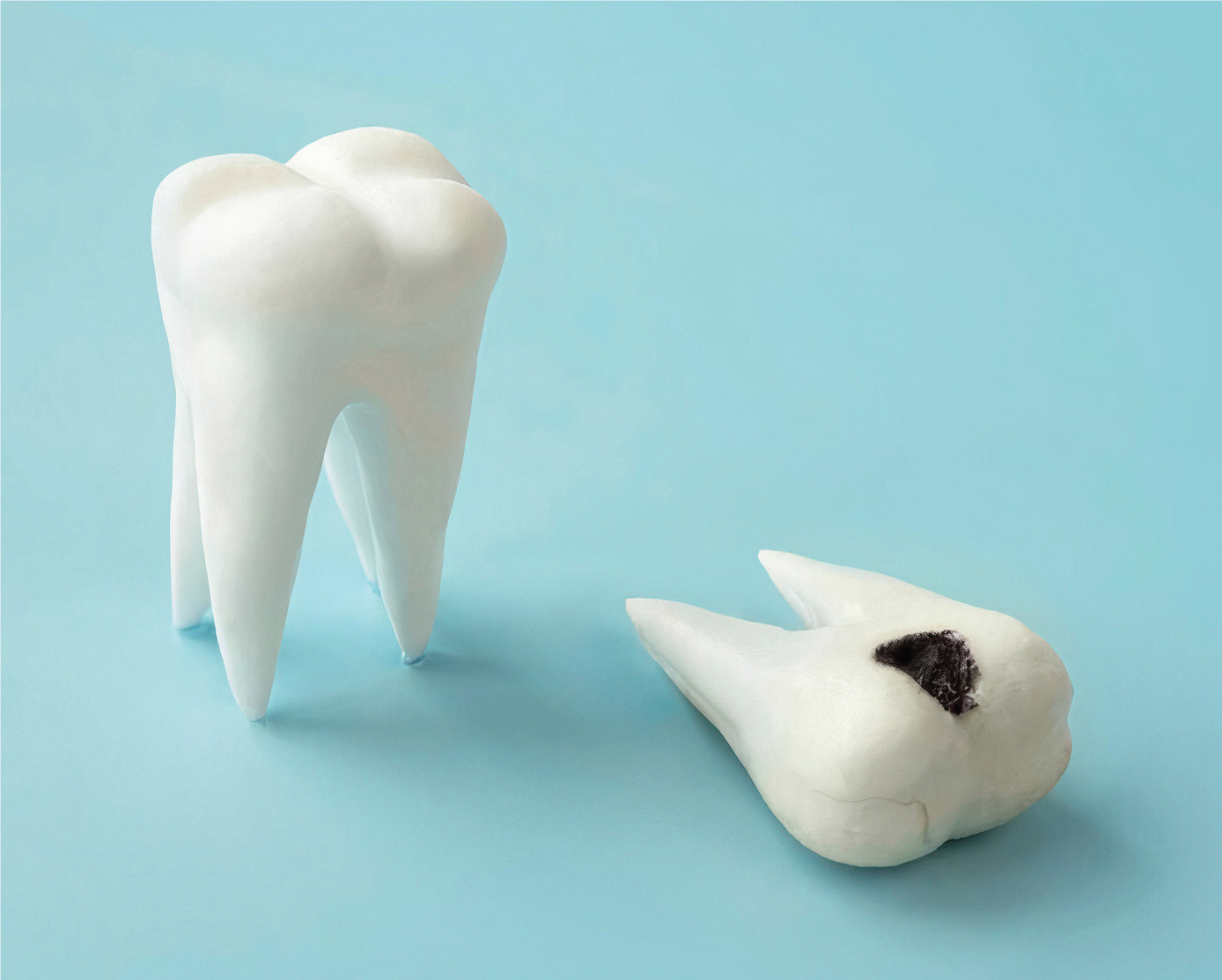
Because when a tooth decays, the living tissue inside becomes infected, and the pain can become unbearable. At that stage, the dentist has no choice but to perform a root canal treatment or to extract the tooth. Teeth cannot regenerate themselves or naturally heal cavities. As for the gums that we often dismiss with a “So what if they rot?” attitude – as the disease progresses, they cause our teeth to loosen and eventually fall out. Thus, even teeth without decay may need to be extracted. If the space left by an extracted tooth is not restored, the neighboring teeth begin to tilt into the gap, and the opposing tooth starts to elongate. Ultimately, the loss of single tooth can compromise the health of several others. The impact of all these changes on our appearance – and consequently on our psychological and social well-being – is well known to all of us.
So how can we protect our teeth and gums?
By brushing our teeth at least twice a day, using dental floss, not neglecting to brush our tongue, and supporting oral hygiene with mouth rinses. Is that all? No! We must also visit our dentist every six months to address problems that may not be visible to us but can be detected and resolved early by professionals.
In cases of tooth wear, a filling or crown may be necessary. If no treatment is provided, our jaw joints may also be affected, resulting in tooth pain, jaw pain, and headaches. However, by using custom-made nigh t guards prepared by our dentist and worn during sleep, we can easily prevent these potential damages caused by teeth grinding or clenching.
Now, you might say: “Some people never brush their teeth, and they still don’t get cavities – all their teeth are intact.” So, how is that possible?
The influence of genetics on tooth decay and gum disease is undeniable. It is now known that both the number and diversity of microorganisms in our mouth are linked to our genetic inheritance. For example, if your parents still have their natural teeth, suffer from few gum problems, and you also take good care of your teeth, attend regular check-ups, and avoid excessive consumption of sugary and acidic foods, you are likely to experience very few dental or gum problems yourself.
The causes of tooth decay have been studied for many years. Differences in cavity occurrence among people who grow up in the same environment and have similar dietary habits suggest that, in addition to diet, genetic factors also play a role. Studies on twins, for instance, show that the rates of tooth decay are much more similar among identical twins than among fraternal twins.
Oral and dental health begins in the womb. A healthy genetic inheritance from the parents, proper and adequate nutrition from infancy, regular dental care, and consistent dental check-ups throughout life not only give us beautiful and healthy teeth and gums but also contribute to the overall well-being of our body and to the healthy genetic legacy we pass on to future generations.
Zerrin Işık Tüfekçi