Minimally Invasive Approaches in Dentistry
Minimally Invasive Approaches in Dentistry
Zerrin
Işık Tüfekçi
Stating
that today’s dental patients predominantly prefer treatment methods that ensure
maximum preservation of their healthy tooth structure while saving time, the
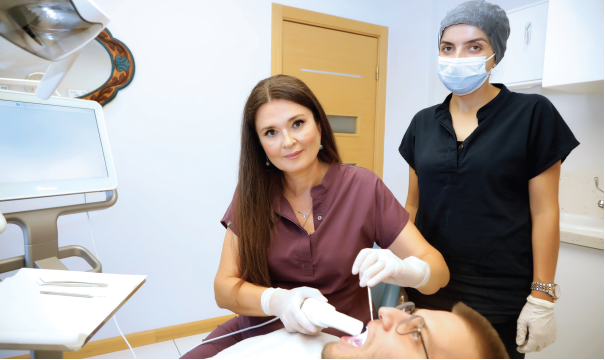
founder of Evrensel Oral and Dental Health Polyclinic, Dentist Zerrin Işık
Tüfekçi, emphasizes the importance of a minimal invasive approach aimed at
reducing tissue damage to the lowest possible level.
One
of the most striking areas of the human face is undoubtedly the mouth, largely
because of the teeth. A person who smiles with well-aligned, bright white teeth
naturally attracts attention with a pleasant and positive appearance. Beautiful
and healthy teeth are among the most important elements of personal image.
Treatment
alternatives known as the “minimal invasive” approach, which aim to minimize
tissue damage, have become one of the most widely discussed topics in modern
medicine and dentistry in recent years. Today, patients’ awareness levels and
treatment expectations have changed significantly compared to the past. Most
patients prefer high-quality, cost-effective, simple, painless, time-saving
treatment techniques that preserve their natural tooth structure to the
greatest extent possible and do not negatively affect their daily lives.
For
example, patients who are dissatisfied with the color of their teeth can
achieve their desired shade through whitening methods instead of having their
teeth prepared for crowns. Patients who complain about gaps, discoloration, or
shape irregularities often prefer porcelain or composite laminate
veneers—procedures that require minimal tooth reduction, or in many cases no
reduction at all—rather than full-coverage crowns. These treatments are
commonly known among the public as bonding and porcelain veneers. Even in
implant surgery, shorter implants or alternative surgical approaches are
offered as treatment options for patients who wish to avoid more demanding
procedures that prolong treatment duration.
As
for malpositioned or crowded teeth, these conditions can lead to both physical
and psychological challenges in a patient’s social life. Crowded teeth are
generally more prone to rapid discoloration and decay. In addition to creating
an aesthetically unfavorable appearance, dental misalignment can prevent
individuals from smiling freely throughout their lives and may also contribute
to periodontal diseases. Orthodontic treatment methods offer more minimal
invasive solutions compared to many other interventions used to correct such
issues. Treating these problems during childhood is particularly beneficial, as
social and professional life in later years can make the decision to wear
braces more difficult. In professions such as marketing and sales, as well as
media, cinema, and theater, braces and brackets may pose aesthetic concerns.
In
today’s world, where minimal invasive approaches are increasingly emphasized,
orthodontic treatment with clear aligners, which can be used in selected
patients without the need for brackets or wires, has become one of the most
popular applications in recent years. In this method, a treatment plan is created
by specialist orthodontists at international centers based on digital scans
taken from the patient’s mouth. Thanks to a three-dimensional simulation of the
treatment plan, patients can preview how many aligners will be used and how
their teeth and facial appearance will look at the end of the treatment. The
therapy is carried out by wearing the clear aligners in weekly intervals and is
completed once the teeth reach the targeted ideal alignment. This
groundbreaking aesthetic solution with invisible clear aligners allows
individuals who say, “I cannot wear braces,” to achieve better-aligned teeth
without altering their natural tooth structure.
As
clearly seen with this treatment method, the increasing use of minimal invasive
approaches in dentistry is directly proportional to the advancement of
digitalization. The result is shorter treatment times, lower costs, and more
predictable outcomes—an encouraging development both for our oral health and
for ensuring that smiles never fade from our faces.