How About Starting Today?
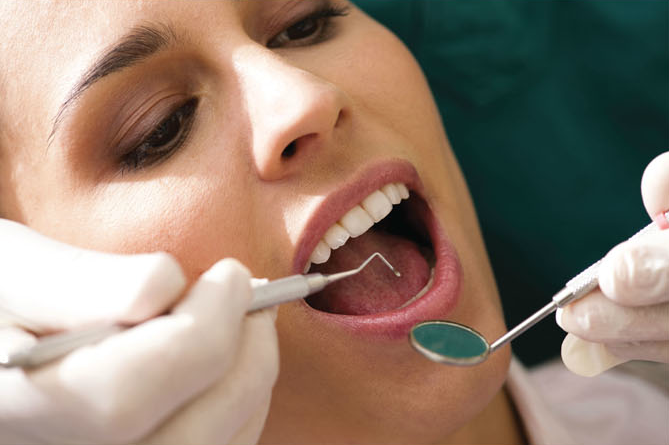
How About Starting Today?
Today, it is widely understood that human health is a whole — a problem in one part of the body can affect other areas as well. People have begun to place greater emphasis on what they can do to protect their health before illness develops.
Thanks to the branch of medicine known as preventive healthcare, which focuses on measures taken before diseases occur, the secrets of a healthy life are now shared by all healthcare professionals. For example, while patients in the past often visited the dentist only to have a painful tooth extracted, today they ask their dentists to do everything possible to save the tooth. “Is there no other option?”, “Can it still be saved?”, “Have I come too late?” — these are questions we frequently hear. People now understand that nothing can replace their natural teeth, and that healthy teeth and gums play a vital role in overall health.
Dentists have long warned their patients that dental abscesses—infections at the root tips of teeth—can become focal points of infection capable of harming the entire body. Recent scientific publications have confirmed how right dentists were to emphasize this issue.
One of the most important topics in modern dentistry today is periodontal disease. This condition is defined as an inflammatory disease affecting the tissues surrounding the teeth — including the gums, the root surfaces, the periodontal fibers that anchor the teeth to the jawbone, and the alveolar bone itself.In its early stages, periodontal disease often goes unnoticed, as it typically causes only mild redness or bleeding of the gums during brushing or chewing. As the condition progresses, gum recession, redness, and swelling become more apparent. In its advanced stages, the teeth may become mobile (loose), and in some cases, may even fall out spontaneously. Patients suffering from periodontal disease often experience persistent bad breath (halitosis) and spontaneous gum bleeding.
In individuals who smoke, the vascular structure of the oral tissues may be compromised, and the degree of keratinization of the gums may be increased. This can mask one of the key warning signs of periodontal disease—gum bleeding. As a result, smokers who are not under regular dental supervision may remain unaware of serious gum problems until the disease has reached an advanced stage. Therefore, smokers should not assume, “My gums don’t bleed, so they must be healthy.” Regular dental check-ups are essential.
The primary cause of gingival inflammation is the accumulation of bacterial plaque along the gumline. When oral hygiene is insufficient, food debris remains on the tooth surfaces, allowing bacteria to form a sticky biofilm called plaque. Bacteria multiply rapidly—dividing approximately every 20 minutes—and within 2–4 days, the resulting environment can lead to gum inflammation and bleeding. If poor oral hygiene continues, the number of harmful bacteria within the plaque increases, which can eventually lead to bone loss around the teeth.
Dental calculus (tartar) forms when minerals from saliva are deposited and harden on the surface of plaque. With proper oral care, both plaque buildup and tartar formation can be prevented. In the early stages of periodontal disease, professional dental cleaning (scaling), tooth polishing (polishing), and oral hygiene instruction are sufficient for maintaining oral health. However, as the disease advances, additional procedures such as root surface debridement, root planing, periodontal surgery, and in some cases even tooth extraction may be required. It should be remembered that the leading cause of tooth loss today is not dental caries (tooth decay), but periodontal disease. Many teeth that are completely free of decay are extracted simply because the supporting periodontal structures are no longer healthy. In addition, numerous scientific studies have demonstrated a strong association between periodontal disease and cardiovascular disorders, highlighting once again the close link between oral health and systemic health. By maintaining good oral hygiene and keeping our teeth and gums healthy, we can prevent the onset of many systemic diseases and enjoy a healthier, more confident life.
To maintain optimal oral hygiene:
• Brush your teeth two to three times daily using the method recommended by your dentist.
• Use a small, pea-sized amount of toothpaste — excessive amounts offer no added benefit.
• Clean between your teeth daily with dental floss or interdental brushes.
• Visit your dentist for a check-up at least every six months, and make this a regular part of your lifestyle.
• Protecting our oral health before problems arise, addressing minor issues early, and enjoying a bright, healthy smile — all begin with one simple step.
So why not start today?
Ankara Life - Haziran 2012
Zerrin Işık Tüfekçi