Flossing
Flossing
Although
tooth brushing effectively cleans most of the tooth surfaces, toothbrush
bristles cannot adequately reach interdental areas or narrow spaces beneath the
gingival margin. Regular use of dental floss and interdental brushes is
therefore essential to remove microbial plaque and food debris from these
areas.
These
adjunctive oral hygiene aids significantly reduce the risk of gingivitis,
bleeding, halitosis, and dental caries and should be considered integral
component of daily oral care. Their use is generally recommended after tooth
brushing.
Dental Floss Use
Dental
floss is particularly effective for cleaning tight interdental spaces. Various
types are available, including waxed, unwaxed, mint-flavored, fluoride-coated,
or chlorhexidine-impregnated flosses, allowing selection based on individual
comfort and dental anatomy.
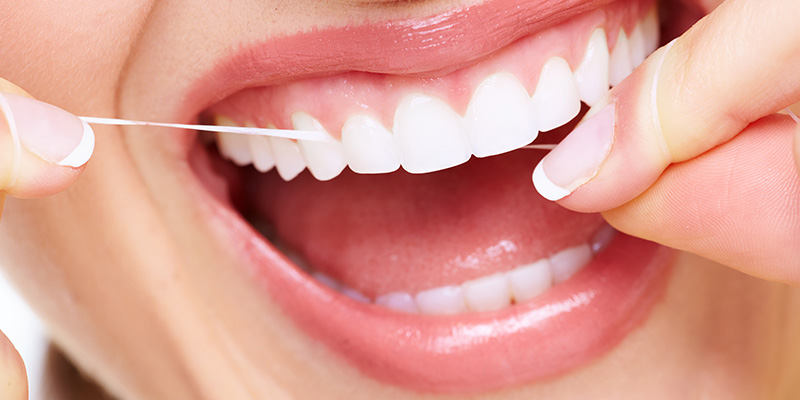
Floss
should be wrapped around the middle fingers of both hands and guided with the
index fingers. It is gently inserted between the teeth, adapted to the tooth
surface, and carefully moved beneath the gingival margin using vertical motions
to remove plaque. Care should be taken to avoid injury or irritation to the
gingival tissues. Individuals who experience difficulty using traditional floss
may prefer floss holders (floss picks).
Regular
and correct use of dental floss plays a crucial role in maintaining gingival
health and is recommended at least once daily.
Interdental Brush Use
Interdental brushes are small cylindrical or
conical cleaning devices designed for areas where interdental spaces are wider
and floss may be less effective. They are particularly beneficial for:
·
individuals with
interdental spacing,
·
patients with gingival
recession,
·
implant- and
bridge-supported restorations,
·
patients undergoing
orthodontic treatment.
The brush should be inserted gently without
force and moved back and forth along the tooth surfaces to remove plaque. The
appropriate brush size must be recommended by a dentist, as brushes that are
too small may be ineffective, while oversized brushes may traumatize the
gingiva. Daily use supports periodontal health and is generally recommended
once per day.
Which Method Should Be Preferred?
Dental
floss and interdental brushes are complementary tools rather than alternatives.
The appropriate method depends on the width of the interdental spaces and the
patient’s clinical condition:
·
Tight
interdental contacts > dental floss
·
Open
spaces, gingival recession, implant or prosthetic areas > interdental
brushes
In
some patients, combined use of both methods provides optimal plaque control.